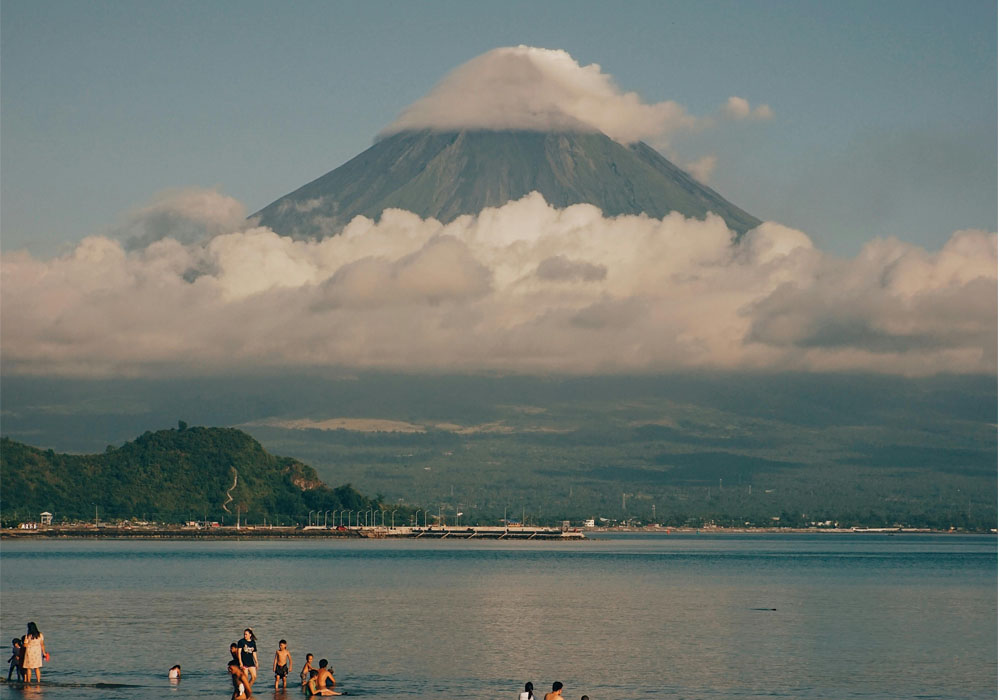
Amed is a place where time doesn’t just slow down; it seems to surrender to the rhythm of the tides. While the rest of Bali pulses with the neon energy of beach clubs and surf breaks, this stretch of volcanic coastline on the island’s eastern tip remains tethered to the soul of the “Old Bali.”
The Salt and the Silence: A Journey to Amed
The drive to Amed is a transition of the spirit. As you leave behind the bustling intersections of the south, the air begins to change. It thins out, carrying the scent of drying cloves and salt spray. By the time the mighty silhouette of Mount Agung — the “Great Mountain” and the spiritual navel of Bali — looms over the horizon, you realize you haven’t just traveled sixty miles; you’ve traveled decades back in time.

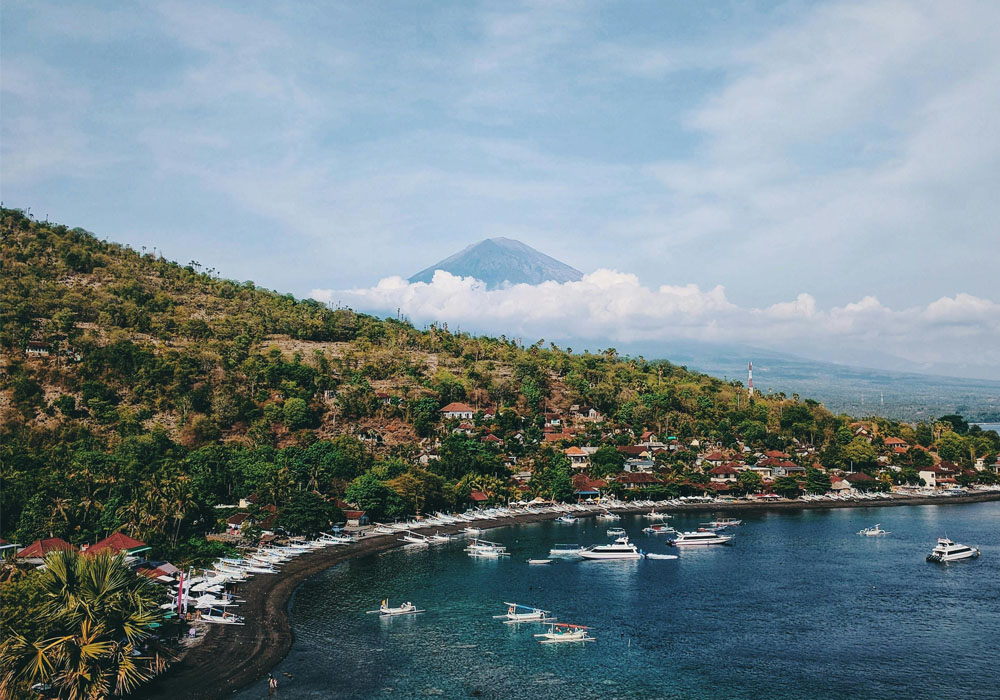
In Amed, the sand isn’t the postcard – white of the Bukit Peninsula. It is dark, coarse, and glittering — a gift from the volcanic heart of the island. This black sand is the first lesson in local wisdom: it reminds us that beauty doesn’t always have to be bright to be profound. In the local worldview, the mountains (Kaja) and the sea (Kelod) represent a sacred axis of balance. Amed sits perfectly at the intersection of both.
The Dawn Ritual of the Jukungs
To truly understand Amed, you must wake before the sun. At 5:00 AM, the coastline is a silhouette of hundreds of jukungs — traditional outrigger canoes painted in vibrant whites, teals, and yellows. These aren’t just boats; they are the lifelines of the village.
As the sky turns a bruised purple, the fishermen push their vessels into the glassy water. There is no roar of heavy engines, just the soft rhythmic splash of paddles. This practice reflects the Balinese philosophy of Tri Hita Karana, specifically the harmony between humans and nature. The fishermen here don’t take more than the sea offers. They hunt for mackerel and tuna using traditional lines, a sustainable dance that has sustained these families for generations.
Watching the fleet return a few hours later, their triangular sails catching the first golden rays of light, is like watching a moving painting. It’s a reminder that “slow” isn’t a lack of progress; it’s a choice of presence.
FIND ACTIVITIES IN AMED
The Wisdom of the Salt Pans
Hidden behind the main road, away from the dive shops and cafes, lies a tradition that is slowly evaporating: the Amed salt farmers.
The process is grueling and poetic. Salt farmers carry heavy buckets of seawater to specially prepared plots of volcanic earth. Through a process of filtration and sun – drying inside hollowed – out coconut trunks, they produce a salt so pure and flaky it was once reserved for Balinese royalty.
Talking to a local salt farmer is a masterclass in patience. They don’t fight the weather; if it rains, the salt is lost. They simply wait for the sun to return. This is the “Amed way” — a quiet resilience. When you taste that salt, you aren’t just tasting a seasoning; you’re tasting the labor of the sun and the patience of a person who understands that the best things cannot be rushed.
Diving into the Living Past
Of course, you cannot write about Amed without looking beneath the surface. The waters here are a liquid cathedral. Just a few kilometers down the road in Tulamben lies the wreck of the USAT Liberty, a WWII cargo ship reclaimed by the ocean.
Swimming through the wreck is a surreal experience. Corals have turned cold steel into a vibrant nursery for pygmy seahorses and schools of jackfish. There is a profound local wisdom found in these depths: Transformation. What was once a vessel of war has become a sanctuary for life. It’s a metaphor for the Balinese ability to absorb the foreign and the fractured, and turn it into something sacred and beautiful.
The reefs of Amed are also a testament to community-led conservation. Many of the “coral gardens” you see right off the beach are protected by the local Banjar (village council). They understand that the reef is their “Gold Mine,” not to be stripped, but to be curated for their grandchildren.
The Golden Hour at Jemeluk Viewpoint
As the day winds down, everyone gravitates toward the hills overlooking Jemeluk Bay. From this vantage point, you see the perfect crescent of the bay, the dotted line of outriggers, and the sun setting directly behind the crown of Mount Agung.
In this moment, the “style” of Amed reveals itself. It isn’t about luxury linens or infinity pools — though those exist here. It’s about the luxury of space. Space to breathe, space to think, and space to recognize our own smallness in the face of a volcano.
The locals often speak of Desa, Kala, Patra — the concept that everything is defined by “Place, Time, and Circumstance.” Amed is the right place, now is the right time, and the circumstance is one of profound peace.
A Seat at the Warung
Your evening in Amed should end at a small, family – run warung. Forget the fusion menus for a night and order the Pepes Ikan — fresh fish steamed in banana leaves with a paste of turmeric, ginger, and chili.
As you eat with your feet in the sand, you’ll likely hear the sound of a distant gamelan rehearsal or the smell of incense from a neighbor’s evening offering (Canang Sari). These offerings are placed everywhere: on the bows of boats, on the dashboards of scooters, and at the entrance of dive shops. They are small, daily reminders to be grateful for the mundane.
Amed teaches you that a “story” isn’t found in the big events, but in the way the salt dries on your skin and the way the mountain watches over the sea. It’s a place that doesn’t ask you to do anything other than simply be.