The first time you arrive in Bali, it doesn’t feel like stepping into a new place. It feels like stepping into a rhythm that has been playing long before you came—and will continue long after you leave.
It begins quietly.
Maybe it’s the soft scent of incense drifting through the morning air. Or the sight of a small woven basket placed gently on the ground, filled with flowers, rice, and a whispered prayer. Before the traffic, before the cafés open, before the island fully wakes—Bali is already in conversation with something unseen.
This is where the story of Bali truly begins.
A Morning That Teaches You to Pause
In many parts of the world, mornings are rushed. Coffee in one hand, phone in the other, always chasing time. But in Bali, the morning invites you to slow down.
You might see a woman in traditional attire stepping out of her home, carrying offerings carefully balanced in her hands. She places them at the entrance, on a shrine, sometimes even on a motorbike or a shop counter. These offerings are called canang sari—a daily gesture of gratitude.
They are simple, yet deeply meaningful.
Each element has its purpose. The flowers represent sincerity. The rice symbolizes prosperity. The incense carries the prayer upward, connecting the human world with the divine. It’s not about perfection—it’s about intention.
There is a quiet lesson here: gratitude doesn’t need to be grand. It just needs to be consistent.
The Island That Lives in Balance
If you stay long enough, you’ll begin to notice that Bali isn’t just a place—it’s a philosophy in motion.
At the heart of Balinese life is a concept called Tri Hita Karana. It means “three causes of well-being,” but its essence is much deeper. It teaches that true harmony comes from balancing three relationships: with God, with other people, and with nature.
You’ll see this balance everywhere.
In the temples, where ceremonies are held with devotion and beauty. In the communities, where neighbors come together not out of obligation, but out of shared responsibility. And in the landscapes—rice terraces carved into hillsides, flowing like green waves, shaped by both human hands and natural wisdom.
Nothing exists alone here. Everything is connected.
FIND ACTIVITIES IN BALI
The Rice Fields That Whisper Stories
Walk through a rice field in Bali, and you’re not just walking through farmland—you’re walking through centuries of tradition.
The irrigation system, known as subak, is more than a way to grow rice. It is a cooperative system built on trust, fairness, and spirituality. Water flows from the mountains through temples, guided by priests and shared among farmers. No one takes more than they need, because they understand that imbalance affects everyone.
The rice itself is treated with respect, almost like a living being. There are ceremonies for planting, growing, and harvesting. It’s not just agriculture—it’s a relationship.
And if you sit quietly long enough, you’ll hear it—the gentle rustle of rice leaves in the wind. It sounds like a conversation between the earth and the sky.
The Ceremonies That Color Life
In Bali, life is marked not just by time, but by ceremonies.
There are ceremonies for birth, for coming of age, for marriage, and for death. But unlike many cultures where death is filled with silence and sorrow, in Bali it is often a celebration.
The Ngaben, or cremation ceremony, is a powerful reminder that life is a cycle. The body returns to the elements, and the soul continues its journey. There is music, color, and even moments of laughter—because death is not seen as an end, but as a transition.
This perspective changes how you see your own life.
It gently asks: if everything is temporary, what truly matters?
The Island That Teaches You to Feel
Bali doesn’t just show you beauty—it invites you to feel it.
You feel it in the sound of gamelan music, its rhythms both complex and hypnotic. You feel it in the movements of traditional dance, where every gesture tells a story, every eye movement carries emotion.
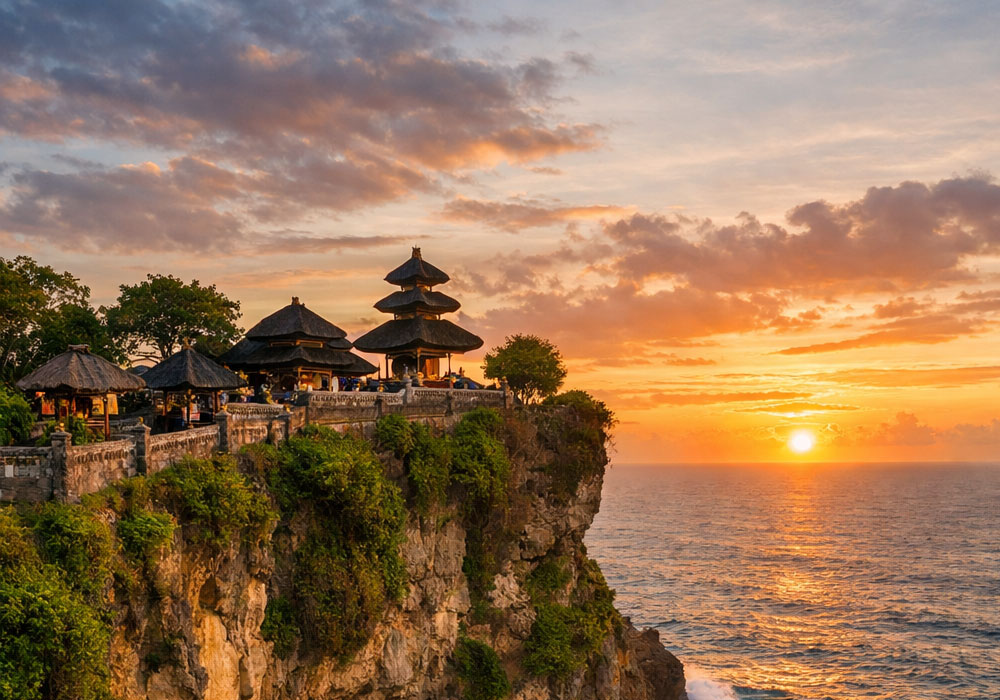
You feel it in the temples during sunset, when the sky turns gold and the ocean reflects it like a mirror. In those moments, time seems to pause, and you realize that beauty doesn’t need explanation.
It just needs presence.
The Hidden Wisdom in Everyday Life
What makes Bali special isn’t only the grand ceremonies or the famous landscapes. It’s the quiet wisdom woven into everyday life.
It’s in the way people smile—not as a performance, but as a natural expression. It’s in the way communities gather to help each other, whether it’s building a house or preparing for a ceremony.
It’s in the understanding that happiness isn’t something to chase, but something to cultivate.
Even challenges are approached with a different mindset. Life is not always easy here—there are struggles, just like anywhere else. But there is a resilience rooted in belief, in community, and in the idea that everything has its place in the balance of life.
A Place That Changes You
Many people come to Bali looking for something.
Some come for adventure. Some come for healing. Some come without knowing what they’re searching for at all.
And somehow, Bali meets them where they are.
Maybe it’s in a quiet moment by a temple. Maybe it’s during a conversation with a local who shares a simple yet profound insight. Or maybe it’s in the realization that you’ve finally slowed down enough to hear your own thoughts.
Bali doesn’t force change. It gently invites it.
Leaving, But Not Really
The hardest part about Bali is leaving.
But even when you go, something stays with you.
Maybe it’s the habit of pausing before you start your day. Maybe it’s the awareness of balance in your own life. Or maybe it’s a deeper appreciation for the small, meaningful rituals that often go unnoticed.
Bali becomes a quiet voice in the back of your mind, reminding you to slow down, to be grateful, and to stay connected—to yourself, to others, and to the world around you.
The Story Continues
Bali is not just a destination. It’s a story—one that is still being written every day.
And when you visit, you don’t just observe the story.
You become a part of it.
So when you walk through its streets, step into its temples, or simply sit and watch the world pass by, remember this:
Bali is not asking you to understand everything.
It is simply asking you to feel.
And sometimes, that is more than enough.