Greeting from Canggu. Selamat pagi, Bli and Gek! Pull up a plastic stool, grab a cold Bintang or a fresh coconut, and let me tell you how life really flows here in the “Gu.”
You see, everyone talks about Canggu like it’s just a playground of brunch spots and beach clubs. But for us locals, or those of us who have stayed long enough to let the dust of the shortcut settle into our skin, Canggu is a rhythm. It’s a pulse that changes from the smell of incense in the morning to the scent of burnt rubber and expensive perfume at night.
The Morning Offering: Canang Sari and Salt Air
My day doesn’t start with an espresso shot; it starts with the sound of a broom sweeping dry leaves and the gentle “tink-tink” of a temple bell.
Around 6:00 AM, before the digital nomads have even thought about their first Zoom call, the real Canggu is awake. I love walking down toward Nelayan Beach. This is when the air is still cool, and the sky is that soft, milky pink.
I see the mothers—the real bosses of the village—dressed in their sarongs, gracefully placing Canang Sari (our daily offerings) on the shrines, the sidewalks, and even on the dashboards of their motorbikes. You see the smoke from the incense rising everywhere. It’s a reminder to be grateful before the chaos starts.
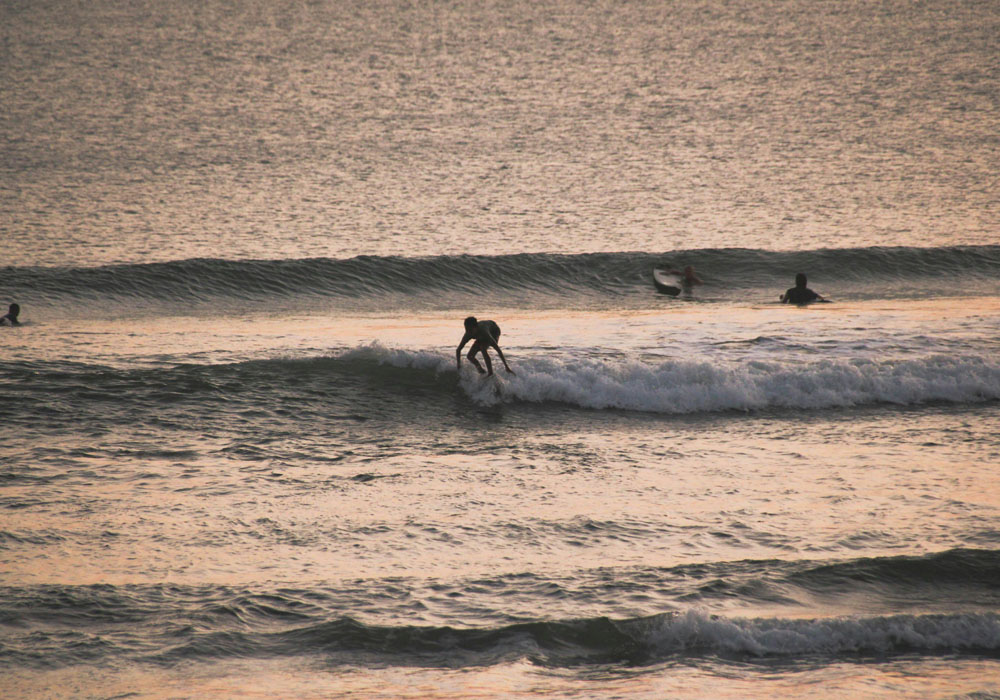
Down at the shoreline, it’s a beautiful mess of harmony. You have the local fishermen pushing their colorful jukung boats into the surf, their muscles tight from years of hauling nets. Right next to them, the “dawn patrol” surfers are waxing their boards. We nod to each other. It doesn’t matter if you’re a local Balinese fisherman or a pro surfer; at 6:30 AM in the water, we are all just small dots in the Indian Ocean.
After a quick dip, I hit the local warung. Forget the $15 smashed avocado; I’m looking for the lady selling Nasi Bungkus from the back of her motorbike. For 10,000 rupiah, I get a brown paper pyramid filled with ginger-spiced chicken, a bit of omelet, and sambal that’s hot enough to wake up my ancestors. That’s the fuel you need for a Canggu day.
The Midday Hustle: Navigating the Chaos
By 11:00 AM, the “Gu” has transformed. The heat starts to shimmer off the asphalt, and the famous Canggu Shortcut becomes a test of patience and soul.
As a local, navigating the shortcut is like a dance. You see a tourist on a rented Scoopy looking terrified as a truck squeezes past, their wheels inches away from the rice paddy drop-off. I just give a little “pip-pip” of the horn and a smile. You can’t be in a rush here. If you fight the traffic, you lose. If you flow with it, you eventually get where you’re going.
I usually spend my afternoon away from the main drags of Batu Bolong. I head up toward Pererenan or the quieter pockets of Babakan. Here, you still see the “Old Canggu.” I see my neighbors drying cloves on large mats by the side of the road, the scent heavy and spicy in the sun. I see the kids coming home from school, three to a bike, laughing and waving.
This is the balance we try to keep. We build the fancy villas and the gyms, but in the middle of it all, the subak (irrigation) system still carries water to the rice fields. We are a village wearing a cosmopolitan mask, but the heart is still very much green.
LEARN HOW TO SURF IN CANGGU
Sunset: The Golden Hour Ritual
You cannot live in Canggu and ignore the sunset. It’s mandatory.
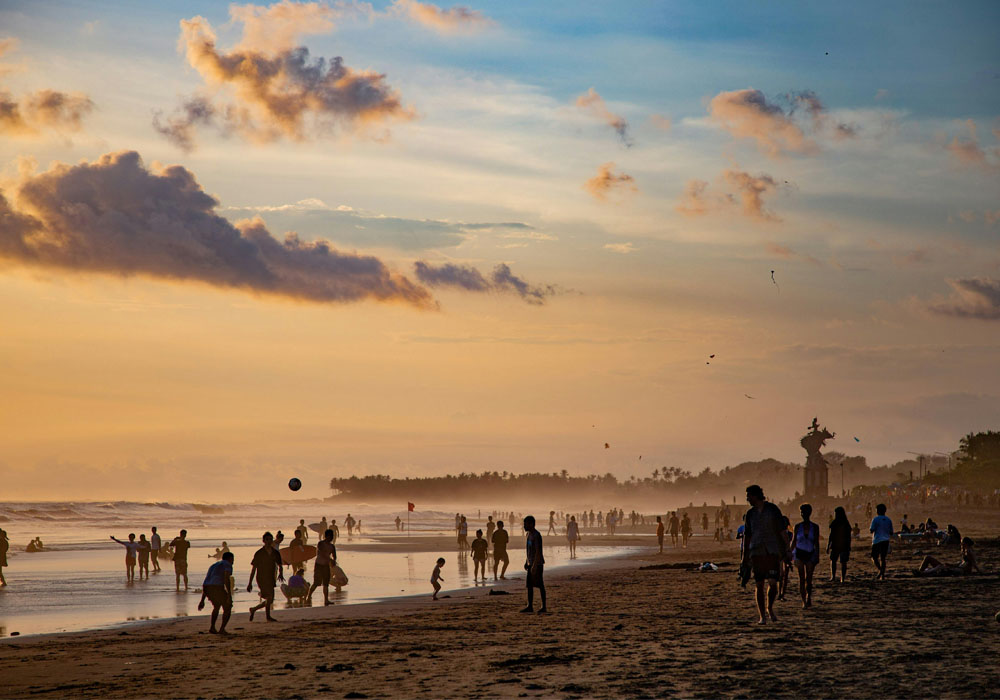
When the sun starts to dip, everyone gravitates toward the beach. I usually head to Berawa. I don’t always go to the big fancy beach clubs with the DJs and the minimum spends. Sometimes, the best seat in the house is a plastic chair at a local beach shack.
I sit there with my friends, our feet in the sand. We watch the sky turn into a bruised purple and fiery orange. We watch the dogs—the famous “Canggu Bali Dogs”—running wild and happy along the tide line. There’s a specific energy at sunset here; it’s like the whole town takes a collective deep breath. We talk about the waves, the new construction popping up, and who’s throwing the best party tonight.
The Night Shift: Neon and Basslines
When the stars come out, Canggu puts on its dancing shoes.
Now, I’ve seen this place change from a sleepy surfing outpost to a nightlife capital. My night usually starts at a small “speakeasy” or a local bar where the Bintang is cold and the music is live. There’s something special about the Canggu nightlife—it’s casual. You can wear your best linen outfit or your salt-crusted board shorts from the morning; nobody cares.
Around midnight, I might find myself at Old Man’s or heading toward The Lawn if I want to feel the sea breeze. But the real “local” experience? It’s the late-night food run.
After a few drinks and some dancing, we don’t go for pizza. We go to Warung Indonesia or any Late Night Nasi Jinggo stand. Standing under a buzzing fluorescent light at 2:00 AM, eating spicy noodles and fried tempeh with people from all over the world—that’s when you feel the magic. You’ll see a millionaire tech founder sitting next to a local surf instructor, both of them sweating from the sambal. In the dark of the Canggu night, everyone is equal.
The Reflection
As I ride my bike home, the air is finally quiet again. The smell of the ocean is back, replacing the exhaust fumes of the day.
Living in Canggu as a local is about embracing the contradiction. It’s loud, it’s dusty, and it’s crowded—but it’s also vibrant, creative, and deeply spiritual. We welcome the world to our doorstep, but we make sure to keep our incense burning.
Canggu isn’t just a place on a map anymore; it’s a feeling of being exactly where the action is, while still being able to hear the wind in the palm trees if you just listen closely enough.
The History: From Rice Paddies to the “Temple of Enthusiasm”
Long before the digital nomads arrived with their laptops, Canggu was a quiet collection of three main villages—Canggu, Tibubeneng, and Pererenan.
The Ancient Anchor The story really starts in the 16th century. A high priest named Dang Hyang Nirartha traveled along this coast. He felt a powerful energy where the land met the sea and established Pura Batu Bolong. For centuries, this temple was the “spiritual lighthouse” for local fishermen and farmers. They prayed there for the safety of the sea and the fertility of the soil. Back then, “Canggu” wasn’t a brand; it was just a place where the rice met the salt.
The Surfers’ Secret (The 1990s) In the 90s, Canggu was a “secret” only spoken about in whispers by hardcore surfers. They’d ride through dirt paths and mud to get to Echo Beach or Old Man’s. There were no hotels—just a few beach shacks where you could get a cold water and a bowl of noodles. In 1990, the village hosted its first international surf event, and the world finally got a glimpse of our long, peeling waves.
The “Hipster” Genesis (2010s) The real shift happened around 2010. A brand called Deus Ex Machina opened their “Temple of Enthusiasm” in the middle of the rice fields. They brought together custom motorbikes, surfing, and art. Suddenly, it wasn’t just for surfers; it was for “creatives.” Within five years, the green paddies started turning into white villas. The local farmers, who had spent generations in the mud, suddenly found themselves as landlords or villa managers.
Today, we call it the “Global Village.” It changed fast—maybe too fast for some—but the soul of it is still there if you know where to look.
How to Get Here: The Local Way
Getting to Canggu from the airport (Ngurah Rai) is your first test of Balinese patience. Here is how we do it:
1. The “Smart Local” Move: Ride-Hailing Apps
Don’t just walk out of the terminal and take the first person who shouts “Taxi!” at you.
- The App: Download Grab or Gojek.
- The Pickup: There is a dedicated Grab Lounge or Gojek Lounge at both the International and Domestic terminals. It’s air-conditioned, and the staff will help you book a ride at a fair, fixed price (usually around Rp 200,000 – Rp 300,000 for a car).
- The Pro Tip: If you only have a backpack, you can book a GrabBike. It’s the fastest way to slice through the legendary Bali traffic, but be ready for a “wild” ride!
2. The “VIP” (Pre-Booked) Style
If you’re coming with a lot of bags or family, message your guesthouse or hotel a few days before. Most of us have a cousin or a friend who is a driver. It usually costs about the same as a Grab, but your driver will be waiting with a sign that says your name. It’s the most “santai” (relaxed) way to arrive.
3. The Adventure: The Shortcut Challenge
As you enter Canggu, your driver will likely head for The Shortcut.
- The History: It was originally just a narrow path through the rice fields to save time.
- The Reality: Now, it’s a legendary bottleneck. You might see a car almost falling into a rice paddy or a traffic jam caused by a single stray dog.
- The Local Advice: Don’t stress. Just look out the window. This is the “baptism” every visitor must go through to earn their stay in the Gu.