Kanto Lampo Waterfall may not be the tallest or most powerful waterfall in Bali. Yet its beauty lies in something simpler: the harmony between water, rock, and time. And sometimes, the quiet places are the ones that stay with you the longest.
Following the Sound of Water
I arrive just after sunrise, when the air still feels cool and the village around me is slowly waking up. Roosters call in the distance, and the scent of wet earth rises from the ground. A small pathway leads downward, and with every step the sound grows louder—the steady rhythm of falling water.
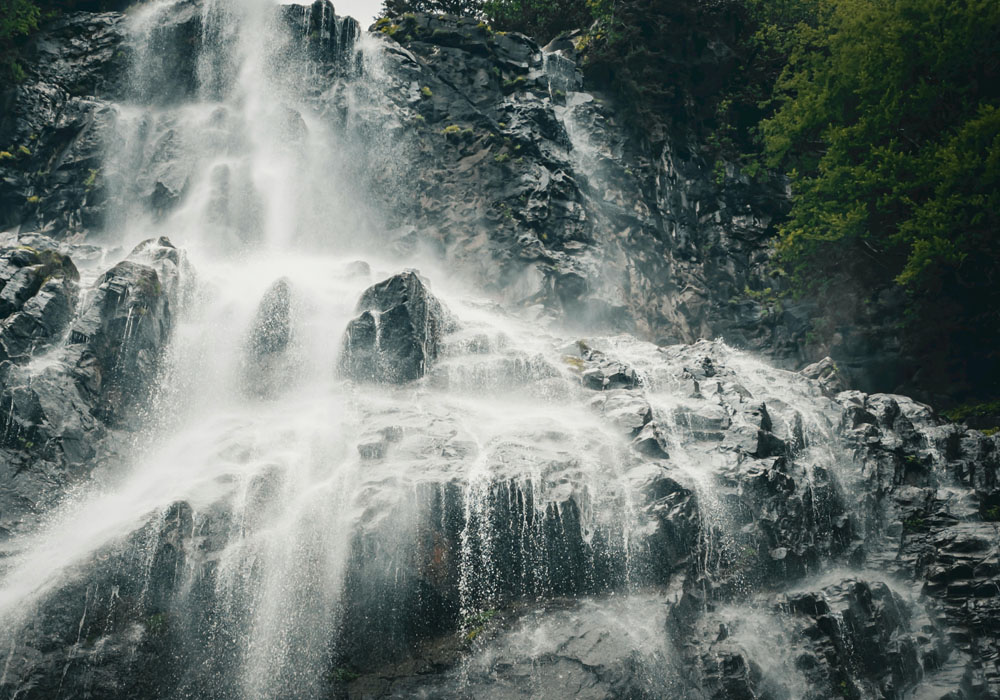
Soon the view opens, and there it is: Kanto Lampo Waterfall. Unlike the tall, single – drop waterfalls people often imagine, this one spreads across a staircase of black volcanic rock. Water flows gently over the stones, creating a natural curtain that looks almost sculpted by hand.
A Waterfall Shaped by Time
Standing at the base, I notice how the water doesn’t rush violently. Instead, it glides down the rocks, splitting into dozens of small streams before gathering again in the pool below.
The stepped formation of the rocks is what makes Kanto Lampo unique. Layers of volcanic stone have been slowly shaped by water for centuries, creating a natural terrace where water dances over every surface. When sunlight hits the falling streams, the waterfall sparkles like thousands of tiny mirrors.
It feels less like a powerful force of nature and more like a performance — water moving gracefully over the stage of stone.
A Discovery by the Local Community
Interestingly, Kanto Lampo was not always a famous destination. For many years, it was simply part of the local environment used by nearby villagers. The waterfall became known to travelers only in the last decade, when local residents began organizing and maintaining the area for visitors.
The community of Gianyar village now manages the site, ensuring that tourism benefits the people who live around it. Pathways, steps, and safety areas have been carefully built without changing the natural beauty of the place.
This reflects an important local philosophy: development should support nature, not replace it.
Local Wisdom in the Flow of Water
In Balinese culture, water is sacred. It is believed to purify both the body and the spirit. Waterfalls, rivers, and springs are often connected to rituals and temple ceremonies across the island.
While Kanto Lampo is mainly visited for its beauty, the deeper meaning remains. Water represents renewal and balance. Just as water flows continuously over rock, life also moves forward, smoothing rough edges over time.
Watching the water cascade over the dark stones, it is easy to understand why Balinese culture sees water as a symbol of cleansing and harmony.
Stepping into the Water
The pool at the bottom of the waterfall is shallow enough for visitors to wade in, especially during the dry season. The water feels cool and refreshing after the short walk down the stairs.
Many visitors climb carefully onto the rocks beneath the waterfall for photos. Standing there, with water falling around you like a curtain, is a unique experience. The gentle pressure of the water on your shoulders feels almost like a natural massage.
Still, it is important to move carefully — the rocks can be slippery, and respecting the power of nature is always part of the experience.
Best Time to Visit
The best time to visit Kanto Lampo Waterfall is early morning between 7:00 and 9:00 AM. During this time, the light is soft, the air is cooler, and there are fewer visitors.
Late afternoon can also be beautiful, but by midday the area often becomes busy with travelers taking photos. Early morning allows you to enjoy the peaceful atmosphere before the crowds arrive.
During the rainy season, the waterfall becomes stronger and more dramatic, though the water may appear slightly muddy due to increased flow.
FIND TOUR TO KANTO LAMPO WATERFALL
Entrance Fee and Visitor Information
The entrance fee to Kanto Lampo Waterfall is usually around IDR 20,000–25,000 per person. This fee is managed by the local community and helps maintain the area, including the walking paths and facilities.
Visitors should be prepared to walk down several flights of stairs to reach the waterfall. The descent takes around 5–10 minutes, and there are resting spots along the way.
Basic facilities such as changing rooms, small shops, and rest areas are available near the entrance.
How to Get There
Kanto Lampo Waterfall is located in Gianyar Regency, about 30 minutes from Ubud and around one hour from Denpasar or the southern Bali areas.
The road leading to the waterfall passes through quiet villages and rice fields, making the journey part of the experience itself. Many travelers combine a visit to Kanto Lampo with other nearby attractions such as temples or countryside tours.
Leaving with the Sound of Water
As I climb the steps back toward the entrance, the sound of the waterfall slowly fades behind me. The sunlight has grown brighter now, and more visitors begin arriving.
But the memory of the moment remains—the way water slid across ancient stone, the cool mist in the morning air, and the quiet rhythm of nature at work.
Kanto Lampo Waterfall may not be the tallest or most powerful waterfall in Bali. Yet its beauty lies in something simpler: the harmony between water, rock, and time.
And sometimes, the quiet places are the ones that stay with you the longest.