If Saraswati Temple teaches the beauty of knowledge, Mount Batur teaches humility before nature. And in Bali, both lessons are equally sacred.
Before Dawn in the Highlands
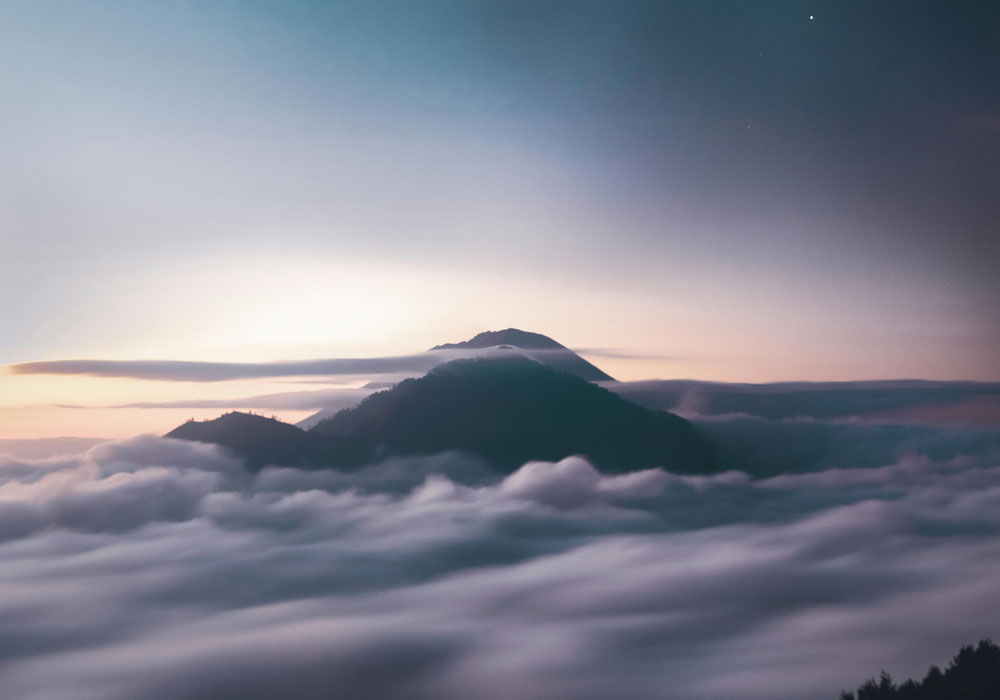
I begin this journey long before the sun even thinks about rising. It is still dark when I arrive at the foothills of Mount Batur, wrapped in a cool mountain breeze that feels worlds away from Bali’s beaches. The sky is heavy with stars, and the silhouettes of villages around Kintamani rest quietly, as if holding their breath.
Headlamps flicker on. A few soft greetings are exchanged. No one is loud here—Mount Batur demands respect, even before you start climbing.
Walking on the Body of a Volcano
The trail begins gently, but I can feel it immediately—this is not just a mountain, this is a living volcano. The ground beneath my feet is a mix of sand, hardened lava, and volcanic rock, shaped by eruptions that once changed this landscape forever.
Mount Batur stands at 1,717 meters above sea level and is one of Bali’s most active volcanoes. Its eruptions, recorded for over a thousand years, have destroyed villages and also created fertile land. In Bali, destruction and creation are never separate—they walk hand in hand.
Local Guides and Mountain Wisdom
As we climb, my local guide shares stories passed down through generations. For the Balinese, Mount Batur is not just a trekking destination—it is sacred. The mountain is considered part of the island’s spiritual axis, aligned with Mount Agung, Bali’s holiest peak.
Local wisdom teaches that mountains are the realm of the gods. This is why homes, temples, and even sleeping positions are traditionally oriented toward the mountains. When you climb Mount Batur, you are not conquering it—you are visiting it.
The Caldera That Changed Everything
Halfway up, the land opens slightly, and I can sense the vastness of the ancient caldera surrounding us. Thousands of years ago, a massive eruption created this enormous bowl, now home to Lake Batur, Bali’s largest lake.
The lake below is more than scenery. It is a lifeline, providing water for agriculture across the island. Subak irrigation systems, a UNESCO-recognized tradition, depend heavily on water flowing from this region. Here, nature, farming, and spirituality are inseparable.
Reaching the Summit Before Sunrise
The final stretch is steep. My legs burn, my breath shortens, and the cold sharpens. Then, suddenly, the horizon begins to glow.
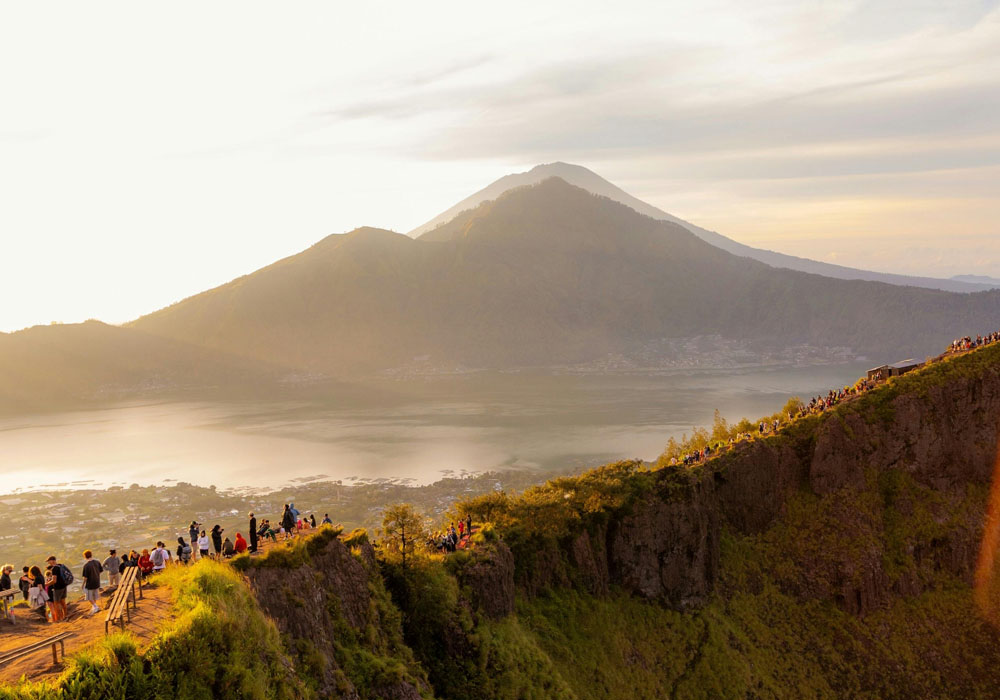
At the summit, I sit on volcanic rock still warm from the earth’s energy. Steam rises from cracks nearby, a quiet reminder that the volcano is still alive. When the sun finally breaks through the clouds, the sky explodes into shades of orange, pink, and gold.
Below me, Lake Batur reflects the light like a mirror. In the distance, Mount Agung stands tall, watching silently. It feels less like a view and more like a moment you are allowed to witness.
Breakfast Cooked by the Earth
One of Mount Batur’s simplest joys is breakfast at the top. Eggs and bananas are often cooked using the volcano’s natural steam, a tradition that turns raw earth energy into nourishment.
Eating here feels different. Food tastes better when effort, cold air, and gratitude are mixed in. It is a humble meal, but deeply satisfying.
Understanding Mount Batur’s History
Mount Batur’s most significant eruptions occurred in 1917, 1926, and 1963. Entire villages were buried, temples destroyed, and lives lost. Yet each time, communities returned.
This is a powerful local lesson: resilience. Balinese people do not see nature as cruel or kind—it simply is. Humans must adapt, respect, and rebuild with humility.
Best Time to Visit
The best time to climb Mount Batur is during the dry season, from April to October. Sunrise treks usually start between 3:00 and 4:00 AM, depending on your starting point.
Mornings are cooler and clearer, offering the best chance for a dramatic sunrise. Rainy season treks are possible but can be slippery and cloudy, sometimes hiding the views entirely.
Entrance Fees and Trekking Costs
There is no single “ticket booth” for Mount Batur, but local village trekking fees apply. If you go with a licensed local guide—which is strongly recommended—the cost usually ranges between IDR 400,000–700,000 per person, often including:
- Hotel pickup
- Local guide
- Entrance and village fees
- Simple breakfast at the summit
Prices vary depending on group size and services.
How to Get There
Mount Batur is located in the Kintamani region, about 1.5–2 hours from Ubud and longer from southern Bali. Most travelers arrange transportation through a tour operator or local guide due to the early start time.
Leaving the Mountain Changed
As I descend, daylight fully reveals the black lava fields and green farms below. Life continues—farmers tend crops, smoke rises from village kitchens, and the mountain watches quietly.
Mount Batur leaves you with more than photos. It leaves you with perspective. A reminder that the earth is alive, that balance is fragile, and that standing still long enough—on a mountain, at sunrise—can teach you more than words ever will.