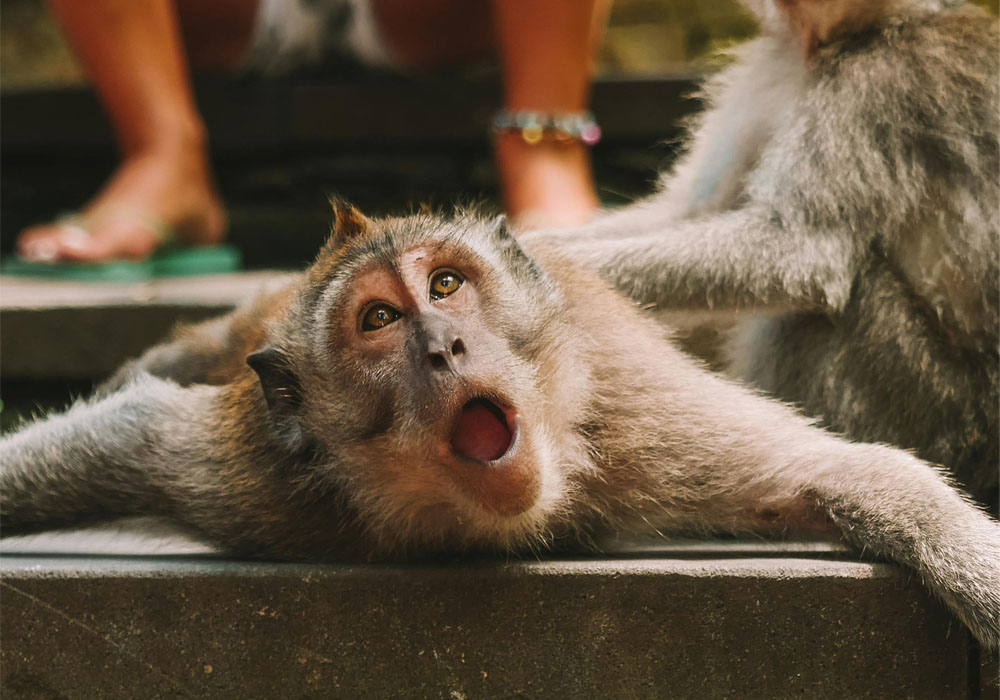
If Mount Batur teaches humility and Saraswati Temple teaches wisdom, Sangeh Monkey Forest teaches coexistence. And that lesson feels especially important, long after the forest disappears behind me.
Stepping into the Green Silence
I arrive at the forest in the late morning, when the sun filters gently through tall trees and the air smells of damp leaves and earth. The road behind me disappears quickly, replaced by towering trunks and deep green shade. This is Sangeh Monkey Forest, a place that feels older than memory.
Before I see a single monkey, I feel something else first—a quiet alertness. This forest is alive, and it knows you are here.
A Forest Unlike Any Other
What makes Sangeh special is not just the monkeys, but the trees themselves. The forest is dominated by towering nutmeg trees (pala), growing straight and tall, their canopies knitting together overhead like a natural cathedral.
Local stories say these trees did not grow here by accident. According to legend, the forest once stood near Mount Agung and slowly “walked” to its current location. Whether myth or metaphor, the message is clear: nature moves with purpose, and humans are guests within it.
Meeting the Guardians of the Forest
Then the monkeys appear. Gray long-tailed macaques move easily between the trees and stone paths, watching visitors with sharp, intelligent eyes. Some sit calmly, others play, and a few test boundaries with curiosity.
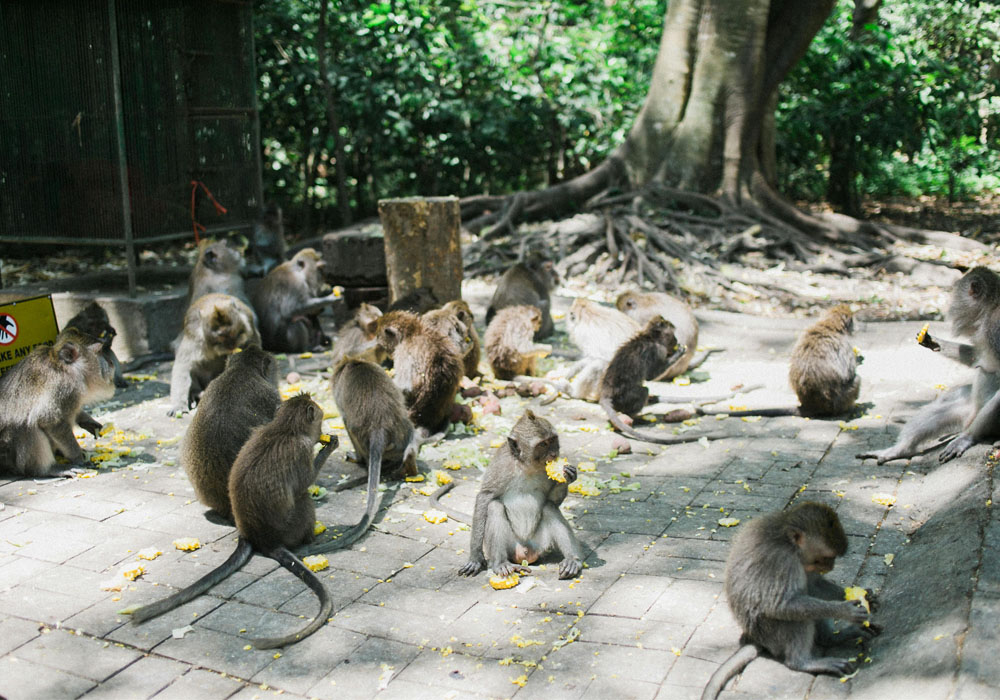
The monkeys of Sangeh are often considered calmer than those in Ubud’s more famous forest, but they are still wild. Locals believe they are guardians of the sacred space, not entertainers. This belief shapes how people interact with them—not with fear, but with respect.
Local wisdom teaches that animals, especially those living in temple forests, are part of the spiritual ecosystem. They belong here more than we ever will.
Hidden Temples Among Trees
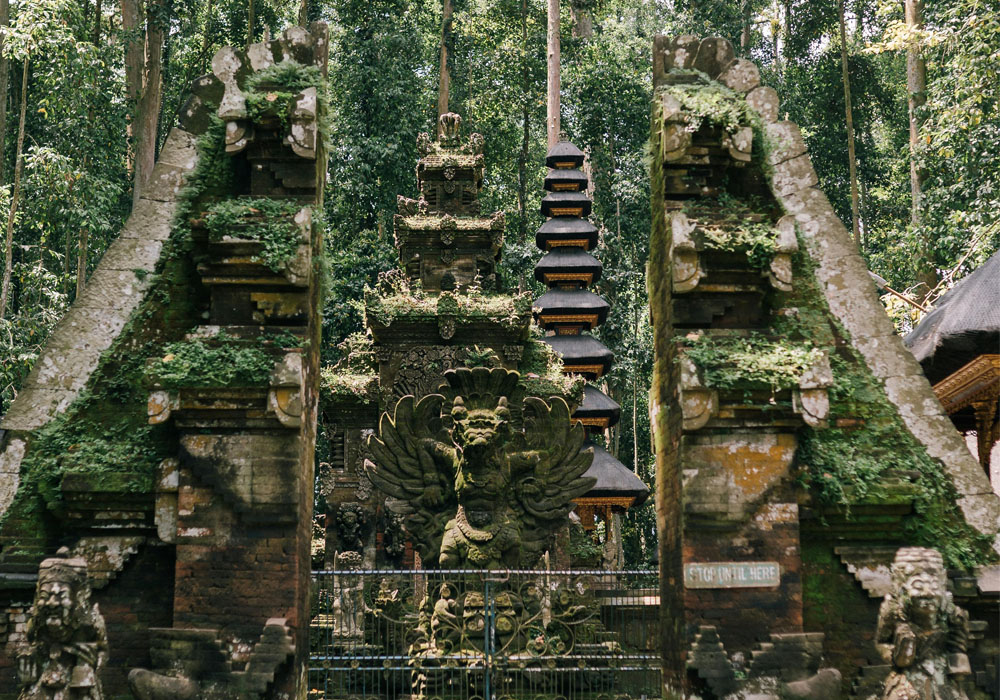
Deeper inside the forest stands Pura Bukit Sari, a temple quietly embraced by trees. Moss covers the stone, roots weave around shrines, and time feels slower here.
The temple is still used by local villagers for ceremonies. This is not a museum—it is a living place of worship. Offerings rest at the base of shrines, and incense smoke curls upward, blending with mist and leaves.
In Bali, sacred places are often woven into nature, not separated from it. Sangeh is a perfect example of that harmony.
History and Community Protection
Sangeh Monkey Forest has been protected for centuries by the local village of Sangeh. Long before tourism, this forest was considered sacred land, guarded by tradition and customary law (adat).
The community-managed model continues today. Entrance fees help fund forest conservation, temple maintenance, and village needs. This reflects a core Balinese principle: nature is not owned, it is cared for—together.
Local Wisdom: Balance, Not Control
Walking slowly through the forest, I’m reminded that Balinese culture does not try to dominate nature. Instead, it seeks balance. The monkeys are not caged. The forest is not overly manicured. Fallen leaves stay where they fall.
This is Tri Hita Karana in action—the balance between humans, nature, and the divine. Sangeh teaches this quietly, without signs or explanations. You learn it simply by being present.
Best Time to Visit
The best time to visit Sangeh Monkey Forest is early morning (8:00–10:00 AM) or late afternoon (3:30–5:00 PM). The light is softer, temperatures are cooler, and the monkeys are generally calmer.
Midday can be hot and busier, especially during peak travel seasons.
Entrance Fee and Practical Tips
The entrance fee is usually around IDR 30,000–50,000 per person (prices may change slightly over time).
A few important tips:
- Do not bring food or plastic bags into the forest
- Avoid direct eye contact with aggressive monkeys
- Secure sunglasses, hats, and loose items
- Follow local staff instructions
Respect goes a long way here—for both humans and monkeys.
How to Get There
Sangeh Monkey Forest is located about 30 minutes from Ubud and around 45–60 minutes from southern Bali, depending on traffic. It is easy to reach by scooter, car, or with a local driver.
Because it is less crowded than other monkey forests, it pairs well with nearby temples or countryside routes.
Leaving with a Different Kind of Memory
As I walk back toward the entrance, a monkey sits quietly on a stone wall, watching the path I’m leaving behind. There is no dramatic farewell, no performance—just presence.
Sangeh Monkey Forest doesn’t overwhelm you. It doesn’t rush you. It simply reminds you that forests remember, animals observe, and sacredness can exist without spectacle.