Saraswati Temple doesn’t ask for much from its visitors. Just presence. And maybe, a little humility.
I am visiting the temple in the early morning, when Ubud still feels like it is half – dreaming. The scooters are quiet, the shops still closed, and the air carries a faint mix of damp stone and burning incense. As I step off the street and through the gate of Saraswati Temple — locally known as Pura Taman Saraswati — the town noise fades, replaced by the soft sound of water and birds.
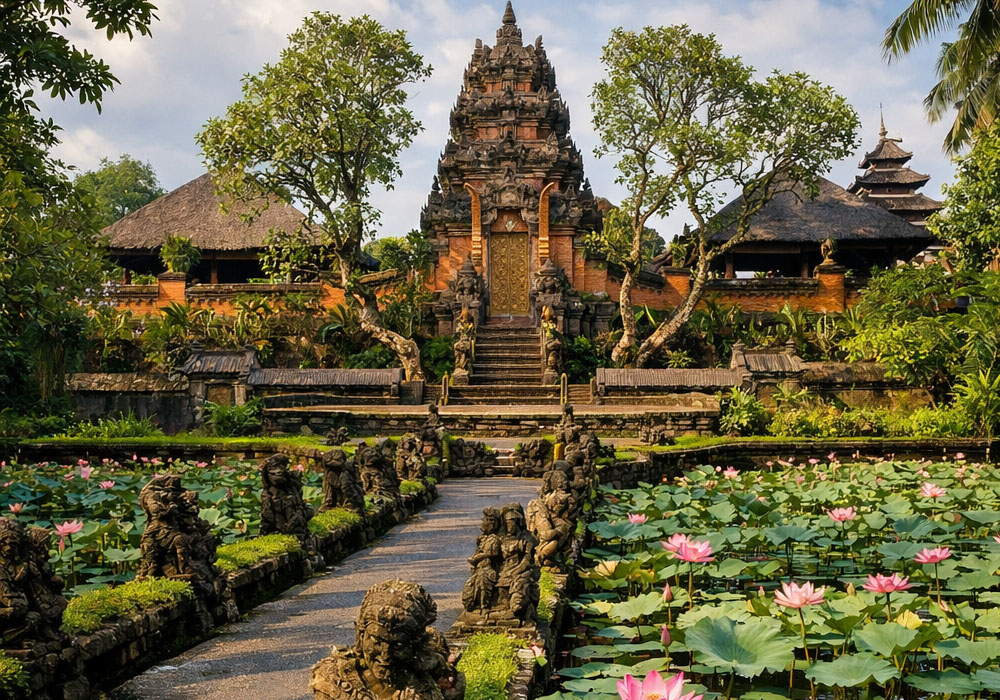
In front of me, a long pathway floats between lotus ponds. The leaves are wide and green, some flowers just beginning to open, as if stretching after sleep. This is the kind of place that asks you to slow down without saying a word.
The Temple of Knowledge and Beauty
Saraswati Temple is dedicated to Dewi Saraswati, the Hindu goddess of knowledge, wisdom, art, and learning. In Bali, knowledge is not something cold or distant — it is alive, sacred, and deeply connected to beauty.
As I walk closer, I notice offerings already placed on the ground: small palm – leaf trays filled with flowers, rice, and incense. Someone has been here before sunrise. In Balinese belief, knowledge should be honored daily, not just pursued. The temple is a reminder that learning is not only for the mind, but also for the soul.
Who Built This Sacred Space
This temple was designed in the early 1950s by I Gusti Nyoman Lempad, one of Bali’s most respected artists and architects. He created it under the patronage of Tjokorda Gde Agung Sukawati, a prince of Ubud who played a major role in shaping the town’s artistic identity.
Lempad’s style is unmistakable — graceful, balanced, and deeply rooted in Balinese philosophy. He didn’t design buildings just to look beautiful; he designed them to feel right. Every carving, every proportion, follows the idea of harmony between humans, nature, and the divine — Tri Hita Karana, a core Balinese concept of balance.
Carvings That Tell Silent Stories
Standing in front of the main shrine, I run my eyes over the stone carvings. Gods, flowers, and mythical creatures seem to grow out of the walls. In Bali, stone is not just material; it is memory.
These carvings are not meant to shout. They whisper. They tell stories of devotion, patience, and discipline. Local wisdom teaches that art is a form of prayer. When a carver works, they are not just creating decoration — they are offering their focus and humility to the gods.
The Lotus Pond as a Philosophy
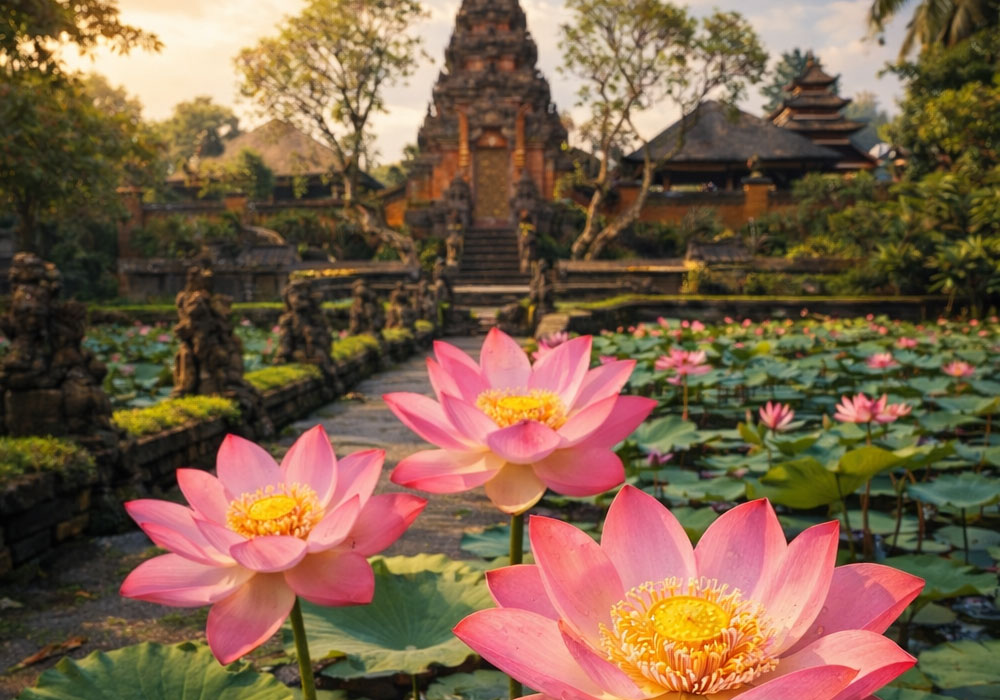
The lotus pond is more than a photo spot. In Balinese symbolism, the lotus represents purity rising from muddy water. Life may be complicated, even messy, but wisdom can still bloom.
Sitting on the edge of the pond, I watch the reflection of the temple dance slightly with the movement of water. It feels like a quiet lesson: clarity comes when you stop disturbing the surface.
Daily Life, Not Just a Monument
Unlike some temples that feel frozen in time, Saraswati Temple feels lived in. Locals pass through, not as tourists but as part of their routine. A woman adjusts her sarong before praying. A temple caretaker sweeps fallen petals without rush.
This is local wisdom in practice — adat, tradition, is not something to perform only on special days. It is woven into everyday life, quietly and consistently.
Best Time to Visit
The best time to visit Saraswati Temple is early morning, between 7:00 and 9:00 AM. The light is soft, the lotus pond looks its best, and the atmosphere is calm. Late afternoon can also be beautiful, especially if you plan to stay for a dance performance in the evening, but it will be busier.
Midday tends to be hot and crowded, and the temple loses some of its gentle magic.
Entrance Fee and Practical Information
One of the beautiful things about Saraswati Temple is that there is no official entrance fee. Entry is free, though donations are always appreciated and help with maintenance.
If you attend a traditional dance performance in the evening (often held in the temple courtyard), tickets usually range from IDR 100,000 – 150,000, depending on the show.
You don’t need a guide to enjoy the temple, but wearing respectful clothing is important. A sarong and sash are recommended; sometimes they are provided, but it’s best to bring your own.
How to Get There
Saraswati Temple is located right in the heart of Ubud, near Ubud Palace and the main street. You can easily walk there if you are staying in central Ubud. For those coming from outside town, scooters and taxis can drop you nearby, though walking the last stretch is often faster.
Leaving with More Than Photos
As I leave the temple, the town of Ubud has fully woken up. Cafés are opening, conversations begin to fill the air. But something from the temple stays with me—a quiet reminder that knowledge is sacred, beauty is a responsibility, and slowing down is a form of respect.
Saraswati Temple doesn’t ask for much from its visitors. Just presence. And maybe, a little humility.